BARONG AND KERIS DANCE
The Eternal Battle of Good vs. Evil in Balinese Mythology
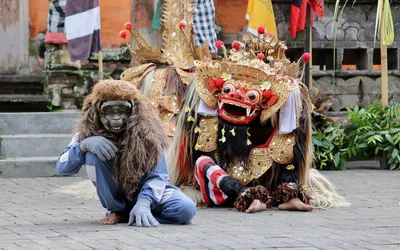
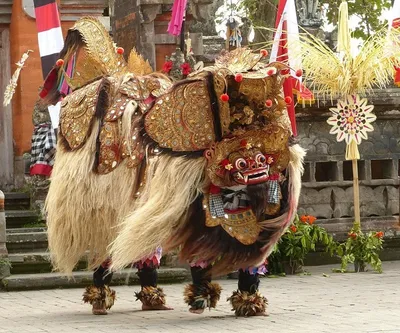
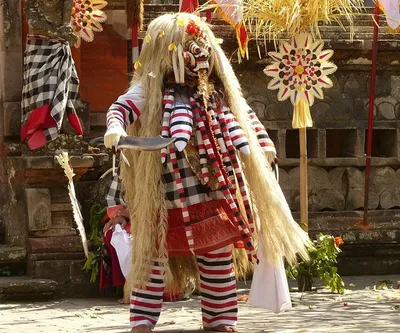
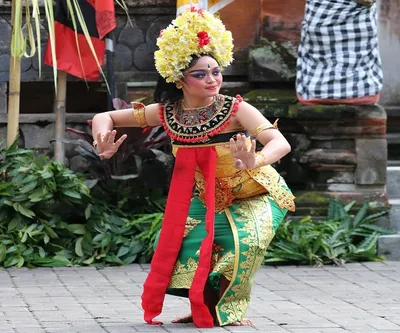
The Barong and Keris Dance is a captivating traditional Balinese performance that vividly portrays the eternal battle between good and evil. At its heart is Barong, the mythical king of spirits and a benevolent protector, often depicted as a lion and animated by Banas Pati Rajah, the spirit child. His formidable adversary is Rangda, a terrifying mythological creature representing malevolence, famously known as the queen of demons. This compelling narrative culminates in Barong's triumph, symbolizing the victory of Dharma (good) over Adharma (evil), a profound reflection on human behavior in daily life. Beyond its dramatic storytelling, the dance features an astonishing trance attraction where performers, seemingly unharmed, plunge daggers into their bodies. Originally a sacred element of the Calonarang religious ceremony, the Barong and Keris Dance has evolved into a popular cultural attraction, mesmerizing audiences with its rich spiritual aura, intricate Balinese carvings, and powerful symbolism. It is a dance full of meaning, inspiring viewers to cultivate good conduct and foster harmony in life, serving as a classic example of how Balinese mythology and history intertwine into a vibrant reality.
Notes
- This iconic dance is typically performed in the morning, primarily in Batubulan Village, Gianyar, Bali, which is conveniently located on the main road to Ubud.
- A highly recommended venue for the performance is Sahadewa Barong & Kecak Fire Dance, situated at Jl. Puseh Temple, Batubulan, Kec. Sukawati, Gianyar Regency, Bali 80582.
- Approximate travel times to Batubulan are 60 minutes from Kuta and 30 minutes from Ubud. Google Maps can assist with directions.
- Consider integrating this cultural experience into a Full Day Ubud Tour or an Ubud and Kintamani Tour package. Alternatively, hiring a private car and driver offers flexibility for your visit.
- The masks of Barong and Rangda are considered sacred. Before each performance, a priest conducts a blessing ceremony, sprinkling holy water from Mount Agung and presenting offerings.
- The performance deeply reflects Balinese beliefs in the balance of good and evil, highlighting the spiritual significance of the dance in daily life.