Goa Gajah Temple (Elephant Cave Temple)
A historical site showcasing the acculturation of Buddhist and Hindu Shiva religions in Bali.
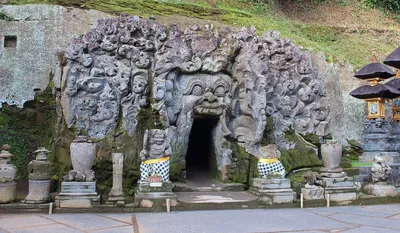
Welcome to Goa Gajah Temple, also known as the Elephant Cave Temple, a significant historical site located on the west side of Blah Batuh Sub-district in Gianyar Regency, approximately 27 km from Denpasar. This unique temple is strategically built at the crevasse edge where the Pangkung River merges with the Petanu River, an area known as Campuhan (Mixture), believed to possess magical energy based on the Rwabineda concept (two different matters).
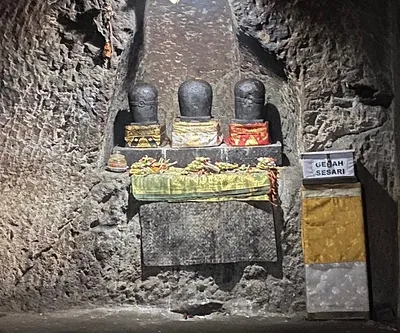
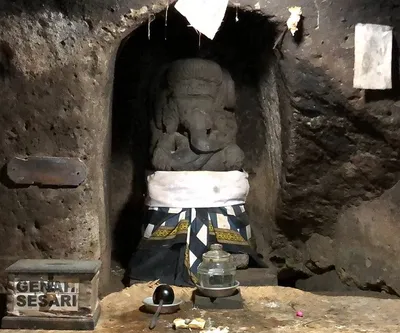
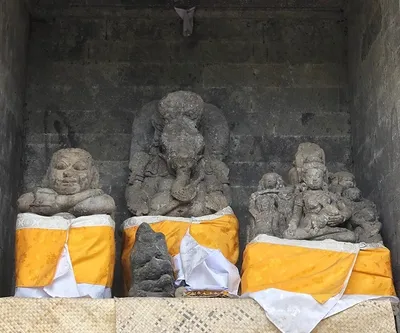
Goa Gajah offers a profound insight into the development of Hinduism in Bali, showcasing remarkable relics and statues with high historical and cultural value. The site is a rare example of acculturation between Buddhist and Hindu Shiva religions, with artifacts like the Ganesha statue, Trilingga, and Hariti figures, alongside fragments of a Buddha statue.
Dating back to the 10th-11th centuries AD during the Warmadewa kingdom, the temple was initially discovered in 1923 by L.C. Heyting. Subsequent research, notably by Dr.W.F. Stutterhiem and Indonesian archaeologists, led to the excavation of a bathing pond adorned with six female statues, whose flowing water is traditionally believed to grant youth.
The name "Goa Gajah" is thought to derive from "Lwa Gajah," referring to a Buddhist hermitage or temple mentioned in the Negara Kertagama papyrus from 1365 M. The site's layout includes a T-shaped cave featuring a Ganesha statue and Trilingga, along with intricately carved cave walls depicting a jungle scene. Beyond the main cave, visitors can explore the Tukad Pangkung complex with its Buddhist relics, including a Buddha statue fragment and hermitage alcoves.
With its comfortable, cool ambiance, enhanced by the proximity to the river and beautiful natural panorama, Goa Gajah Temple provides a deeply religious and engaging experience for those eager to explore Bali's ancient history and spiritual heritage.
What's Included
- Sarongs and scarves (provided with ticket)
What to Bring
- Modest attire is expected, although sarongs and scarves are provided at the entrance.
Notes
- Please do not damage this ancient historic site.
- The location is easily accessible via Google Maps and roadside signposts.
- Transportation rentals with experienced drivers are available through Bali Tour for convenience.
- Travel time is approximately 1.5 hours from Kuta and 30-45 minutes from Ubud.
- Consider visiting Tegenungan Waterfall, which is located nearby.
- The temple is approximately 27 km east of Denpasar.