BALI GOA LAWAH TEMPLE
A Temple with a Nature Cave Dwelt by Thousands of Tail Bats
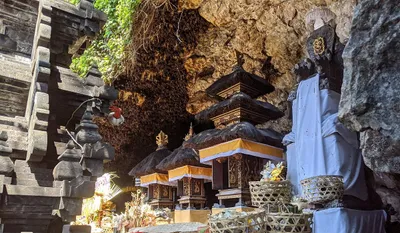
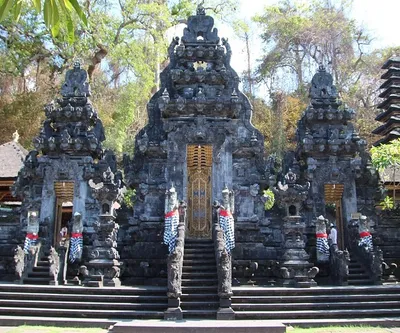
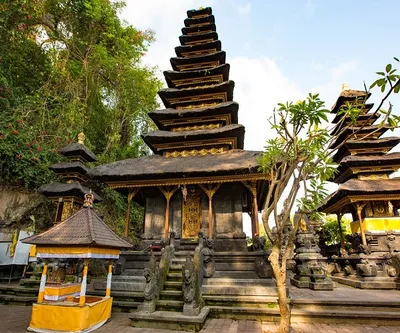
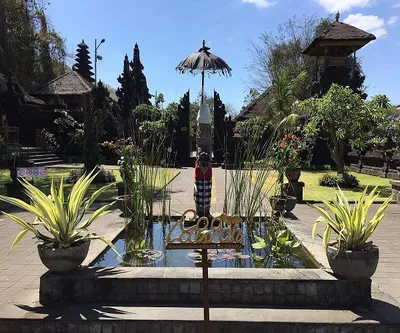
Bali Goa Lawah Temple, also known as Bat Cave Temple, is a significant place of interest situated on a hilly bank in Pasinggahan countryside, Dawan sub-district, Klungkung Regency, East Bali. This sacred site is renowned for its natural cave, which houses thousands of bats, and its strategic location directly opposite a beautiful black sand beach. Goa Lawah holds deep spiritual significance, representing a harmonious blend of mountain and sea (linga-yoni) and serving as a center for the worship of Bhatara Tengahing Segara, the guardian of the ocean, and Sang Hyang Naga Basuki.
According to the ancient papyrus of Dwi Jendra Tattwa, the temple's original name was Goa Lelawah, bestowed by Danghyang Nirartha, a revered priest who propagated Hindu teachings in Bali. During his Tirtha Yatra journeys, he was captivated by the cave's clamoring bats and the serene surroundings, which inspired him to stay for several nights. The bats residing here are considered sacred creatures, protected by local customary rules, and are forbidden from being hunted or caught. They play a vital role in the local ecosystem as fruit-eaters, seed dispersers, and insectivores. The temple is also famously linked to Besakih Temple; Goa Lawah is believed to represent the head of the mythical Naga Basuki, while Goa Rajah in the Besakih complex represents its tail, symbolizing the balance of nature. Local legend suggests that the cave extends all the way to Besakih, a journey a prince from Mengwi once undertook.
The temple's uniqueness lies in the constant presence and activity of the bat colony, a natural phenomenon that visitors can witness. The site also respects other sacred animals, with snakes coexisting within the cave, believed to help control the bat population. Goa Lawah Temple is built applying the Tri Mandala concept, consisting of five strata, each with specific sacred buildings and functions, ensuring peace and prosperity. With its rich history, unique ecosystem, and spiritual importance, Goa Lawah offers a compelling experience for tourists seeking to explore the eastern part of Bali. Facilities include ample parking, food stalls, clean toilets, rest areas, and souvenir vendors, ensuring a comfortable visit.
Notes
- Bats are protected by local customary rules and are forbidden to be hunted or caught, as they are believed to be sacred guardians of the temple.
- Sacred snakes also reside in the cave, believed to help control the bat population.
- The cave is rumored to penetrate all the way to Besakih Temple, though no one has attempted to venture far inside.